Nostalgia is not a strategy: what retro advertising can and cannot do
Making people feel something warm about the past is easy. Making that warmth do a commercial job is the part that needs thought.
A 2014 study in the Journal of Consumer Research by Lasaleta, Sedikides and Vohs reports that nostalgia weakened the desire for money in their experiments, and that nostalgic participants were more willing to spend. That makes nostalgia a useful mood, not a strategy. A strategy still needs an audience, a claim and a measure.
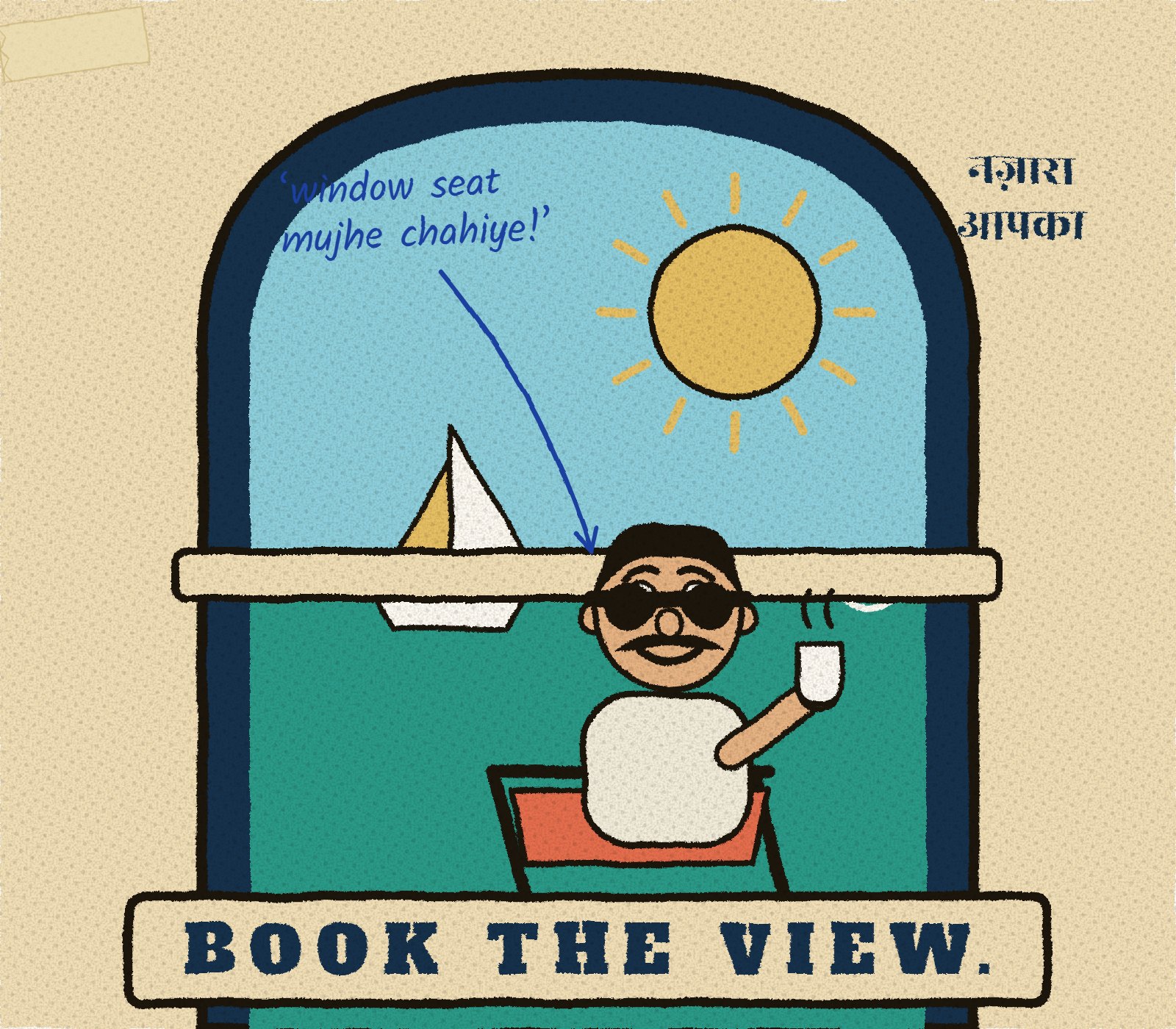
The artwork in this series is original and shows fictional brands. We have not redrawn any real campaign, mascot or slogan, and no national symbol appears.
What the research reports
Lasaleta, Sedikides and Vohs published “Nostalgia Weakens the Desire for Money” in the Journal of Consumer Research in 2014. As the authors describe it, across a set of experiments, people who were made to feel nostalgic placed less value on money and were more willing to spend. These were laboratory studies with specific tasks and participants, so the finding does not tell us what a retro campaign will do for a given brand in a given market.
What that does and doesn't support
It supports a modest claim: warm memories can loosen the grip of price in the moment. It does not support the much larger claims that sometimes get made for retro campaigns, that they build brands or convert buyers by themselves. A feeling is a condition for persuasion, not the persuasion.
Three questions before you go retro
- Whose memory is it? A look that stirs your senior team may mean nothing to the customer you want. In our vintage series, the people who recognise a 1980s serial are not the people who open an investing app for the first time.
- What is the claim? The retro look is a wrapper. Underneath there must be a reason to choose the brand today. If you cannot say it plainly with the wrapper removed, you do not have a campaign.
- How will you know? Name the number before you start. For a brand idea, that can be whether people look for it by name more than before, against the same rivals.
The cultural caution
Borrowing from the past also means borrowing its assumptions. William Mazzarella's study of Indian advertising reminds us that an ad is a negotiation about who the audience is. A retro treatment inherits the old answer unless you change it. That is why our Window shopping concepts draw new characters instead of redrawing old ones, and why the rest of the habit is in how to read a vintage ad.
Where it works
Retro works best when the idea underneath is still true: a ritual still practised, a worry still felt, a household still gathered. It works worst as decoration. For the longer argument about what a campaign owes the culture it borrows from, see what a campaign owes the culture.
Sources
- Nostalgia Weakens the Desire for Money (Lasaleta, Sedikides and Vohs), Journal of Consumer Research 41(3), 713-729, University of Chicago Press, 2014
- Shoveling Smoke: Advertising and Globalization in Contemporary India (William Mazzarella), Duke University Press, 2003
- Advertising: The Magic System (Raymond Williams), New Left Review, 1960
Questions we get asked
Does nostalgia make people spend more?
In the 2014 experiments by Lasaleta, Sedikides and Vohs, nostalgic participants valued money less and were more willing to spend. They were laboratory studies, so the result does not transfer automatically to a campaign.
Is retro advertising a strategy?
No. It is a style. A strategy needs an audience, a claim and a measure.
When does retro work?
When the idea underneath is still true today, such as a ritual still practised.
Test the idea without the costume
We strip the style from your concept and check that the claim stands on its own, then measure it against your rivals.
Ask for a scoped auditWhat we do · How we produce it · Who we do it for · Talk to us