Iconic Indian ads for the ages: a cultural history, 1966 to the 1990s
Advertising is the part of culture that pays for the rest of it. These are five moments when Indian advertising did something larger than selling, and what the scholarship says about them.
Indian advertising between 1966 and 1990 moved from the hoarding to the television set to the national film, and each medium changed what an ad could be: a daily public commentary, a sponsor inside a story, a state message in commercial form. Scholars of the culture industries, from Adorno and Horkheimer to Mazzarella and Mankekar, give us the tools to read them.
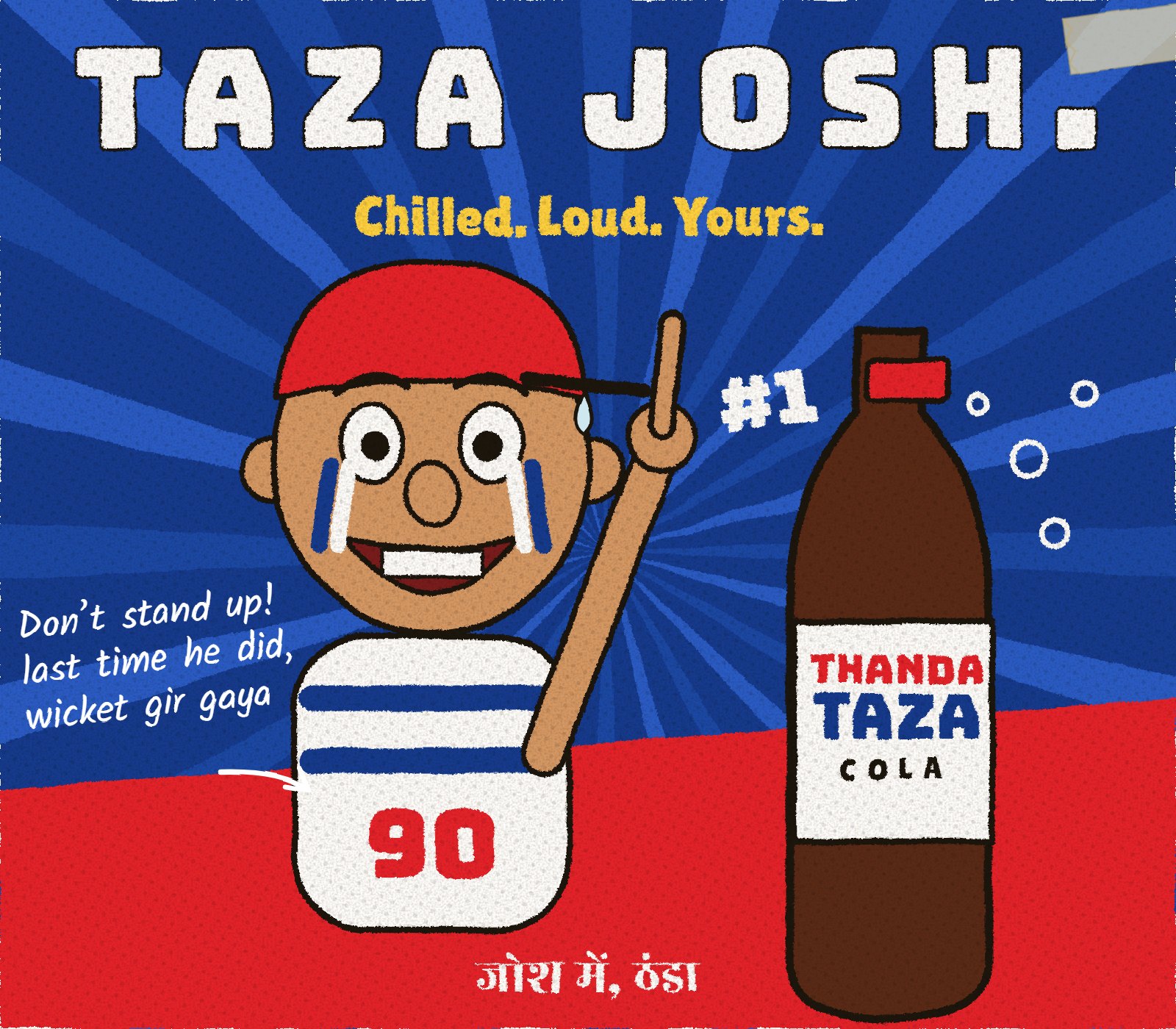
The artwork in this series is original and shows fictional brands. We have not redrawn any real campaign, mascot or slogan, and no national symbol appears. They are homages to the idioms of their decades, drawn for this series, and each is labelled as an original.
Why read old advertising at all?
Because it is the most honest archive of what a country was told it wanted. Two traditions help. Adorno and Horkheimer, writing in 1944, argued that mass-produced culture works by standardisation: products and entertainments that differ on the surface and agree underneath. They called the surface difference pseudo-individuality. Raymond Williams, writing in New Left Review in 1960, called advertising a magic system, one that dresses ordinary goods in meanings and, in his view, obscures the real choices behind them.
Neither was writing about India, and both can be argued with. Used carefully, they give us questions to ask of an old ad: what is it standardising, and what is it dressing up?
The five moments
- 1966, the hoarding. A butter brand turns the outdoor billboard into a daily joke about the news. Read the essay.
- 1969 onwards, the price. A detergent built for households the market had ignored, and a jingle that carried it. Read the essay.
- 1984, the sponsor inside the story. A serial on the state broadcaster carries a brand's name. Read the essay.
- 1988, the state as advertiser. A national film in the form of a commercial. Read the essay.
- The 1980s and 1990s, the agency. Who decided what “Indian” looked like in an ad. Read the essay.
And a method, so you can do this yourself: how to read a vintage ad in five questions.
A medium map
| Decade | The medium that mattered | What it let an ad do |
|---|---|---|
| 1960s | Outdoor hoardings and print | Be seen daily, and be cheap enough to change weekly |
| 1970s | Print, and the first television commercials | Show the product in a life, not just in a pack |
| 1980s | Doordarshan, in colour from 1982 | Reach a whole household at once, and attach a name to a story |
| 1990s | Satellite and cable | Fight for attention among many channels instead of one |
Seven originals
For each decade we drew a period piece in its printing idiom, with caricature figures, for an invented brand. They are on Instagram and LinkedIn as a series, and each is credited as an original. If one of them stirs a memory of a hoarding, a serial or a scooter ride, that is the purpose of the genre, and the reason these ads outlived their products.
A note on our sources
The history is drawn from trade press and publisher descriptions, and where they disagree on a date or a credit we say so. The scholarship is cited as its publishers and reviewers describe it. Where something is our reading, we label it. If you can correct a detail, please write to us.
Sources
- The Culture Industry: Enlightenment as Mass Deception (Adorno and Horkheimer), Marxists Internet Archive, 1944 text
- Advertising: The Magic System (Raymond Williams), New Left Review, 1960
- Shoveling Smoke: Advertising and Globalization in Contemporary India (William Mazzarella), Duke University Press, 2003
- Screening Culture, Viewing Politics: An Ethnography of Television, Womanhood, and Nation in Postcolonial India (Purnima Mankekar), Duke University Press, 1999
- Doordarshan, Wikipedia, undated
Questions we get asked
What is the culture industry?
A term from Adorno and Horkheimer's 1944 essay for the mass production of culture, which they argued standardises products and entertainments while presenting small surface differences as individuality.
Which Indian ads does this series cover?
The Amul topical hoardings from 1966, Nirma from 1969, the sponsored serial Hum Log in 1984, the 1988 film Mile Sur Mera Tumhara, and the agencies that shaped how advertising spoke about India.
Are the artworks copies of real ads?
No. They are original period-style pieces for fictional brands, drawn for this series.
Learn from the ads that lasted
We read your category's old and new advertising for what it standardises and what it dresses up, then build the idea that does neither.
Ask for a scoped auditWhat we do · How we produce it · Who we do it for · Talk to us