The soap that borrowed the film star: celebrity as proof
A star in an ad is a claim without an argument. It works because we already trust the star. That is worth understanding before you pay for one.
Lux soap was introduced in India in 1929 and became known for putting film actresses in its advertising. The idea is borrowed proof: the brand does not say the soap is good, it lets a face people already admire stand in for the claim. Sources disagree on which actress came first and when.
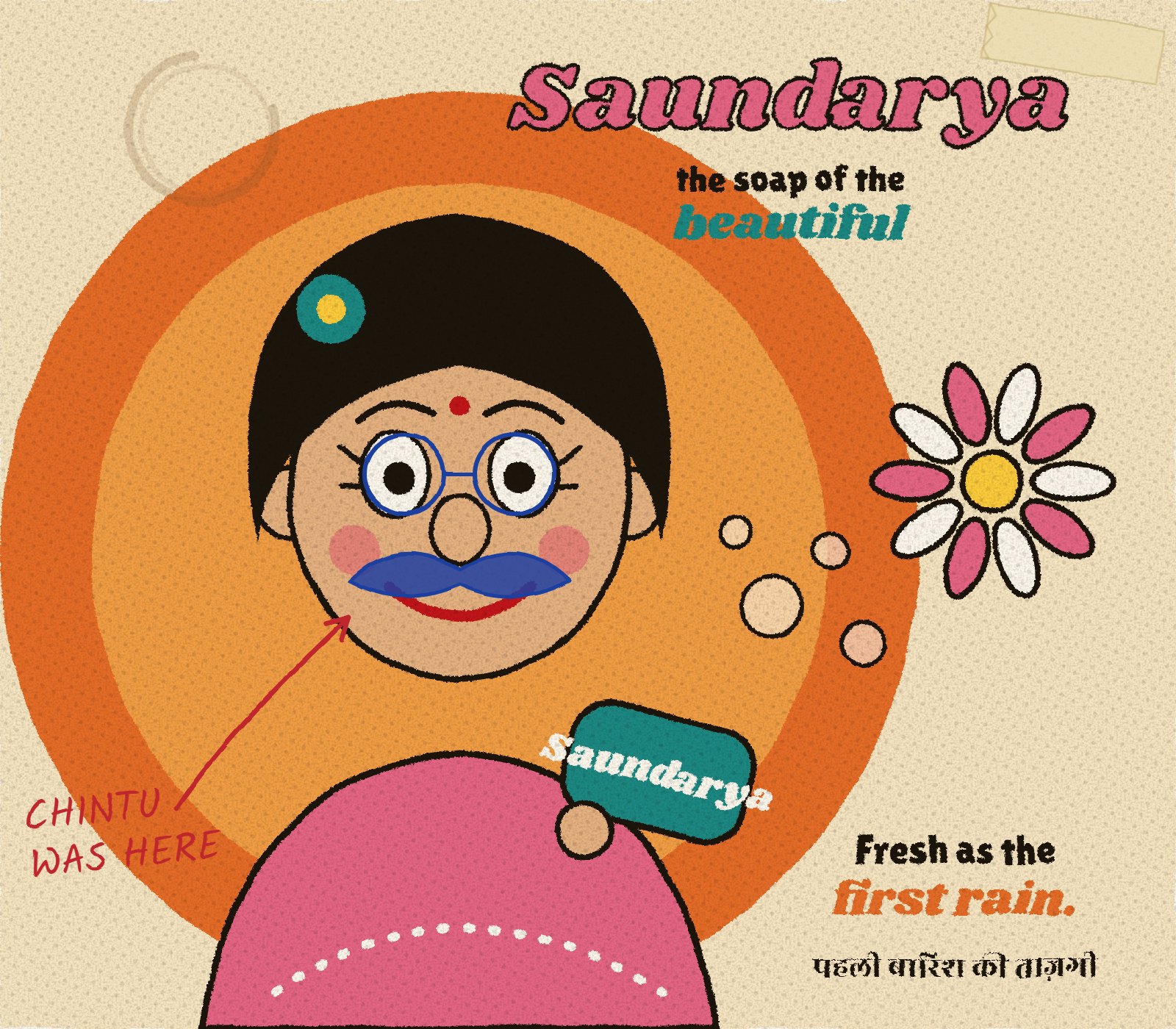
The artwork in this series is original and shows fictional brands. We have not redrawn any real campaign, mascot or slogan, and no national symbol appears. The soap on the page is a fictional one.
What the sources report
Lux was introduced in India in 1929, according to the brand's encyclopedia entry, and its Indian advertising is widely described as an early and lasting use of film actresses as endorsers. The actress Leela Chitnis is often named as the first Indian film star to appear in its advertising, in the early 1940s. Accounts give different years, and we have not found a primary record that settles it, so we say only that she is reported among the first.
How borrowed proof works
A soap cannot easily prove it is better. The buyer cannot compare it before buying, and the difference, if any, is small. A star solves the problem sideways. The ad does not argue. It lends the product the attention and trust the star already has. In our reading this is the plainest case of what Raymond Williams called the magic system: the product is dressed in a meaning that has nothing to do with its chemistry.
Adorno and Horkheimer would add that the pattern is standardised. Swap the face and the structure stays, which is why the form lasted. We offer that as a reading of the format, not as a judgement of any person who appeared in it.
Where it breaks
Borrowed proof is only as good as the borrowing. It fails when the star is seen to endorse everything, when the audience stops believing the arrangement, or when the glamour belongs more to the star than to the product, so that people remember the face and not the brand. The test is simple: cover the logo, and ask whether anyone could say what was being sold.
What a brand can do with it today
Look for proof that is earned, not borrowed. A real customer, a real result, or a ritual the product belongs in all carry more weight than a famous face. If you do use a face, make the product the thing the face is doing, not standing beside. The wider habit of reading an ad for what it dresses up is in how to read a vintage ad in five questions, and the agencies behind these choices are in who writes Indianness?.
The series that this belongs to is Window shopping.
Sources
- Lux (soap), Wikipedia, undated
- Leela Chitnis, Wikipedia, undated
- The Culture Industry: Enlightenment as Mass Deception (Adorno and Horkheimer), Marxists Internet Archive, 1944 text
- Advertising: The Magic System (Raymond Williams), New Left Review, 1960
Questions we get asked
When did Lux arrive in India?
Its encyclopedia entry gives 1929.
Who was the first film star in Lux advertising in India?
Leela Chitnis is often named, in the early 1940s, but accounts differ on the year and we have not seen a primary record.
Does celebrity endorsement work?
It can lend attention and trust to a product, but it fails when the face is remembered and the brand is not.
Find proof that is yours
We look for the evidence your brand can show for itself before recommending anyone else's face.
Ask for a scoped auditWhat we do · How we produce it · Who we do it for · Talk to us