From a city that does not wait for permission.
Mumbai runs on pace, contrast and close attention. Work that holds up here has to be specific, backed by something real, and good enough to be remembered.
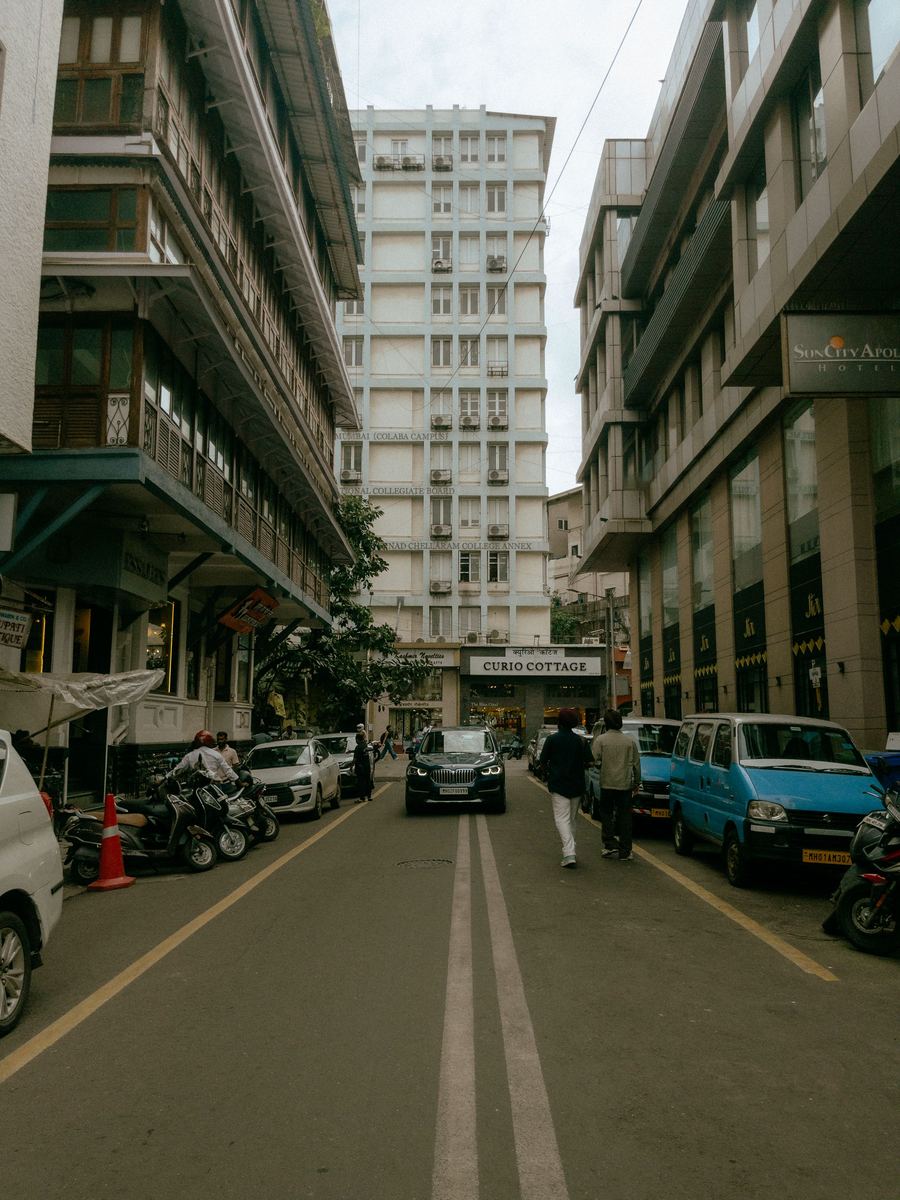
Colaba, south Mumbai.
We work from the bottom of the peninsula, ten minutes from Fort and the harbour.


Evidence forward. Then brave.
We describe ourselves as a growth governance partner, which is a plain way of saying we take responsibility for whether the parts add up, not only for the part we were hired to make.
Evidence forward means the proof arrives before the pitch. Not a post-rationalised deck, not a chart nobody argues with, but the two or three findings that rule routes out while there is still time to change the answer.
It is not the opposite of instinct. It is what lets us back one. The practice is led by Siddhant Dwivedee, who has spent a decade and a half on both sides of the table, inside global network agencies and independent firms, most recently leading an integrated creative, digital and PR team.
We have sat through the quarterly review where the story and the numbers stopped matching. We built this so that does not happen to our clients.
How we are built
We have worked on both sides of the problem.
Building the idea. Buying the audience. Winning the pitch. Defending the number in a room where somebody’s budget depended on the answer.
Most agencies are organised around one of those and quietly hope the others take care of themselves. The creative shop does not own the media plan. The performance shop does not own what the brand means. Nobody owns whether the parts add up, which is where growth leaks and where the argument usually starts.
Colleviate was built the other way round. A decade and a half inside agency networks and in-house teams, moving between the disciplines that most agencies keep apart, led to a simple operating model: senior direction on every engagement, specialists assembled around the brief rather than the org chart, and one person accountable from the brief to the number it has to move.
You are not buying a department. You are buying the judgement about which specialists need to be in the room, and someone who has been in that room before.
Siddhant DwivedeeColleviate, Colaba
How we hold ourselves to it.
We will tell you to spend less.
If the real problem is the product page, we will say so. Even when there is no retainer in it for us.
Platform numbers get their own column.
Labelled as the platform's claim, next to what we actually measured. Never the headline.
Every plan says how it could fail.
Evidence forward cuts both ways. What we expect it to move, what it is measured against, and what result would prove us wrong.
About the studio.
Where is Colleviate based?
In Colaba, at the southern end of the Mumbai peninsula, ten minutes from Fort and the harbour. We work with brands across India, the Gulf, Europe and North America, and overlap a full working day with London and Singapore.
How is Colleviate staffed?
A senior core, plus specialists assembled for each engagement around the brief rather than the org chart. There is no account-management layer between you and the people doing the work.
How does Colleviate charge?
Project fees or a monthly retainer, scoped against the work we agreed and reviewed every quarter. Most engagements start with one thing that is not working.
What kinds of brands does Colleviate work with?
High-ticket brands where the brand has to carry weight and the numbers still have to add up: B2B, luxury and hospitality, food and beverage, fintech and real estate, plus retail, healthcare and D2C.
Like what you see? Give us a slice.
Then let’s talk about why we should have the whole pie.
sid@colleviate.comColaba
Mumbai 400005
Maharashtra, India