Who writes Indianness? The ad agency as culture industry
When a brand says it is speaking for India, someone in an agency had to decide what India sounds like. That someone is the subject of one of the best books on Indian advertising.
William Mazzarella's 2003 book Shoveling Smoke is an ethnography of the Bombay advertising business and its role in the growth of mass consumerism in 1980s and 1990s India. As its publisher and reviewers describe it, it treats agencies as mediators between global brands and local culture, and shows why that mediation never reduces to a formula.
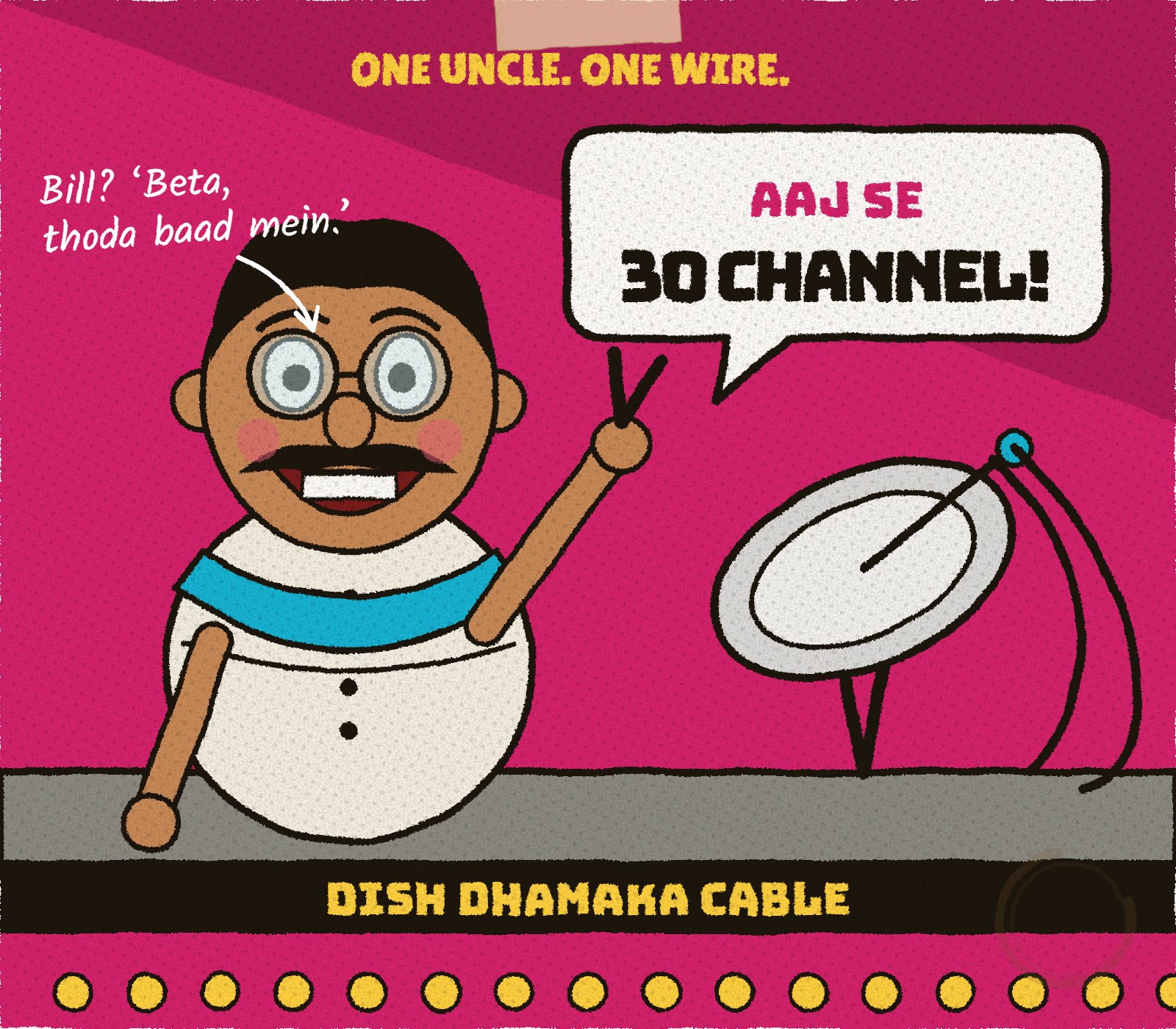
The artwork in this series is original and shows fictional brands. We have not redrawn any real campaign, mascot or slogan, and no national symbol appears. The 1990s piece beside this essay is a fictional cable-television advertisement. This essay relies on how the publisher and reviewers describe the book, not on a chapter-by-chapter reading, and says only what they agree on.
The book
William Mazzarella's Shoveling Smoke: Advertising and Globalization in Contemporary India, published by Duke University Press in 2003, is an ethnography of the Bombay advertising business. It looks at how the industry took part in the rise of mass consumerism in the 1980s and 1990s, and at several campaigns in a major Bombay agency and what they say about Indian national identity. Reviewers describe it as a critical anthropology of the culture industries and as an argument against treating globalisation as one totalising force, because a stubborn local excess keeps interrupting it.
Why the agency is the interesting place
An agency sits between a company that wants to sell the same thing everywhere and a public that does not live everywhere in the same way. Someone has to decide what “Indian” looks like in the ad. That decision is made by a small group of people in a few cities, under time pressure, for a client. A great deal of what a country sees of itself in commercials has passed through a meeting room, usually one with bad coffee and a deadline.
The culture industry, reconsidered
Adorno and Horkheimer pictured the culture industry as a smooth machine. The ethnographic view, as we understand it from the reviews, is rougher: a machine made of people who argue, guess and disagree, and who are also members of the audience they address. That is why the output keeps surprising the system that produced it. It is also why the 1990s are interesting. Satellite and cable multiplied channels, and with them the number of rooms in which that decision was being made.
What a brand should ask its agency
- Who decided what India looks like in this ad, and whom does that exclude?
- Where, in the film or the page, does the local get to speak in its own terms and not as a flavour?
- If we translated this idea, what would we lose, and have we shown it on screen?
The craft questions sit beside the film that tried to answer them at national scale, Mile Sur Mera Tumhara, and the working questions in regional language marketing in India.
Sources
- Shoveling Smoke: Advertising and Globalization in Contemporary India (William Mazzarella), Duke University Press, 2003
- The Culture Industry: Enlightenment as Mass Deception (Adorno and Horkheimer), Marxists Internet Archive, 1944 text
- Screening Culture, Viewing Politics: An Ethnography of Television, Womanhood, and Nation in Postcolonial India (Purnima Mankekar), Duke University Press, 1999
Questions we get asked
What is Shoveling Smoke about?
As its publisher and reviewers describe it, an ethnography of the Bombay advertising business and its role in mass consumerism in 1980s and 1990s India, and what its campaigns say about national identity.
What does Mazzarella argue about globalisation?
Reviewers describe the book as challenging a totalising account of globalisation, because a local excess keeps interrupting it.
Why does the agency matter?
It sits between global brands and local culture, so a great deal of what a country sees of itself in commercials passes through the choices of a few people there.
Audit who your brand speaks for
We review your campaigns for who decided what India looks like in them, and who is left out.
Ask for a scoped auditWhat we do · How we produce it · Who we do it for · Talk to us